
The head of publishing and esports at Riot Games breaks down the pivot to digital, the betting sponsorship, and the ambition of a finally self-sustaining ecosystem.
After more than a decade of losses, Riot Games' esports business still isn't profitable — but it has never been closer. That's the message from John Needham, now head of publishing and esports at the studio behind League of Legends and Valorant, across recent interview to the Excellent Leadership podcast. Needham addresses an activity long thought of as a mere cost center, and describes the business model that, in his view, is turning esports into a self-sustaining ecosystem.
An "esports winter" as the turning point
The shift dates back to the end of the pandemic, Needham describes a difficult period for the entire sector, when sponsorship — the historical pillar of esports revenue — collapsed, while investors grew reluctant to fund professional teams.
« Coming out of the pandemic, we were in this esports winter. The sponsorship business was weak, teams were having a hard time getting capital and investment in their business. We pivoted our business model away from sponsorships to digital items; that was a big positive move for teams. Teams also adjusted how much they were spending. »
This pivot to digital is at the heart of the current strategy. Rather than depending on broadcast and sponsorship deals shared with clubs, Riot made virtual items sold within its games — the famous esports-themed skins — the primary source of revenue shared with teams.
"Most of our business is skins, so it's cosmetics. We don't sell power in our games. It's all looks."
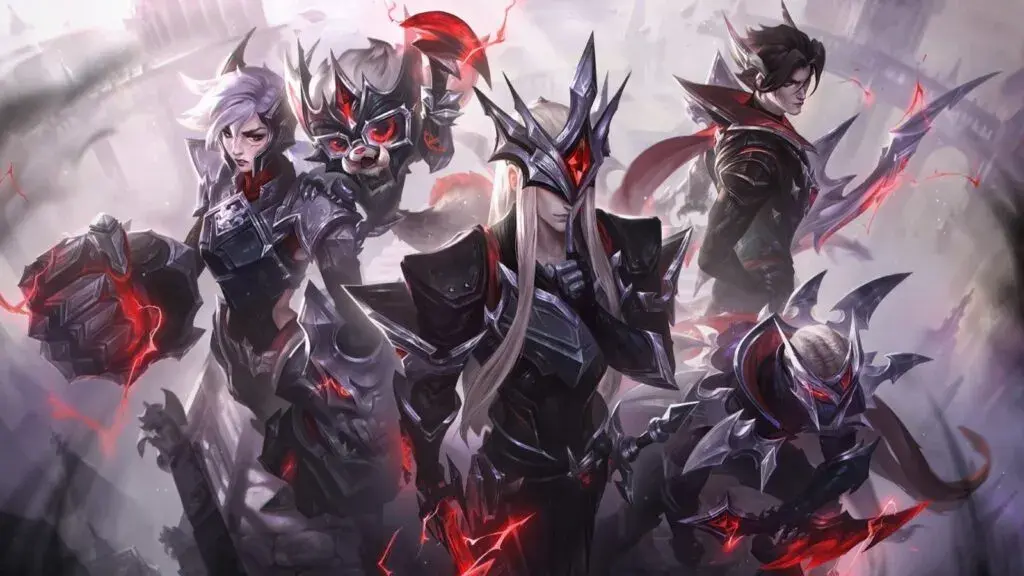
The mechanism is simple: Riot shares roughly 30% of the revenue from esports-themed digital items with professional teams. And the key economic point is that, even after this share, these items remain more profitable than non-esports items.
We share about 30% of revenues back with teams on esports themed goods that even when you take out the 30% that we share with teams, esports digital items are typically more profitable than a non esport digital item. So they more than pay for the share that we share with teams. So it's a self supporting ecosystem.
The goal: an ecosystem that's "free" for Riot
Where esports long functioned as a marketing expense, the ambition now is to make it explicitly profitable — without abandoning its original role. One telling accounting detail: digital revenues are deliberately not attributed to the esports P&L, but to that of the game development teams.
We like that to stay with the games team because we want the games team to be motivated to support esports and to make more content for us.
In other words, esports is already "very close" to breaking even on its own basis — sponsorship — without even benefiting from that digital revenue. Needham's ultimate target is a model where esports fully funds itself, and where all its ancillary benefits come back to Riot.
I am just hoping to evolve this business model to a place where we are a self-sustaining business, and all the benefits of esports, Riot will get for free, essentially. We can break even and be self-sustaining within Riot as a standalone business. Even though we want to be tightly integrated with the games, it would just be great if we could do that. We are well on our way to sustainability. We're very close.
Esports as an engagement engine
If esports matters so much to Riot, it's because it feeds directly back into the game. Needham argues it is probably "more important" to Riot than to any other publisher, because competition sits at the core of its titles' experience.
« The core experience of our games is competition. We think about esports as really just an extension of the core game experience. »
The publisher has, he says, plenty of data on the effect of esports on engagement — hence deliberately very technical broadcasts.
« The most important part of esports for us is just getting our players to go back in and play our games to engage in our games. About 60% of our viewers watch esports to learn about the game. So when you watch our broadcasts, you'll see they're very technical, and that's the reason why – we're trying to help our players learn how to play our games better. »
The player bases of League of Legends, Valorant, and Teamfight Tactics are growing, but the esports audience is growing even faster — and these are, according to Needham, among the most valuable players.
« Our esports viewers are some of the most valuable players in our game and some of our biggest advocates out there in gaming communities. We are always looking to grow, and luckily, we are. »
Free streaming and co-streamers
Unlike traditional sports, Riot doesn't bet on exclusive broadcast rights. The priority is to be where the players are, on free platforms like Twitch and YouTube.
We don't do big exclusive broadcast deals because we don't want to inhibit our players being able to watch […]
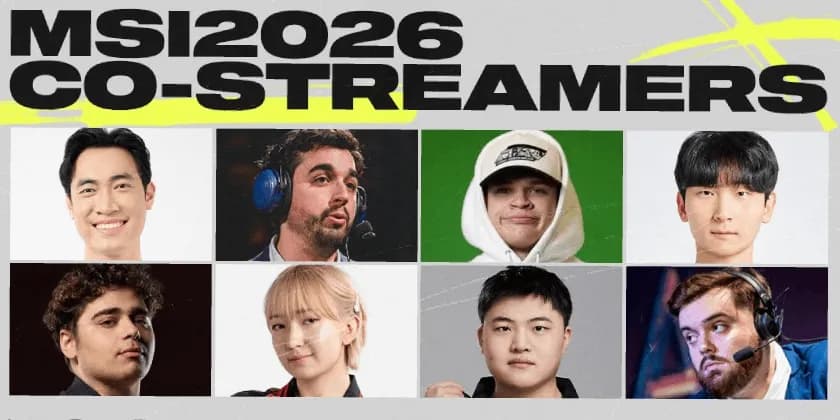
Riot sends its raw feed to influencers who provide live commentary. Today, roughly half of the audience comes through these co-streamers.
Betting and GRID
The most sensitive issue remains last year's decision to open up team sponsorship to betting companies — a move that turned part of the community against it. Needham frames it as an inevitable reality that is better regulated.
Gambling is going to happen around esports regardless of if we are involved or not. Our thought was to find a good, best-in-class way to engage with these betting platforms in a way that was good for players.
An official operator must subscribe to Riot's data service (GRID) to receive "clean" data, with no promotion on broadcasts, in exchange for helping monitor competitive integrity.
« They help us monitor the competitive integrity of our esports matches and isolate matches where we may have match-fixing or other activities that compromise the integrity of our sport. We take the integrity of our competitions very seriously. »
$100 million shared with VCT teams
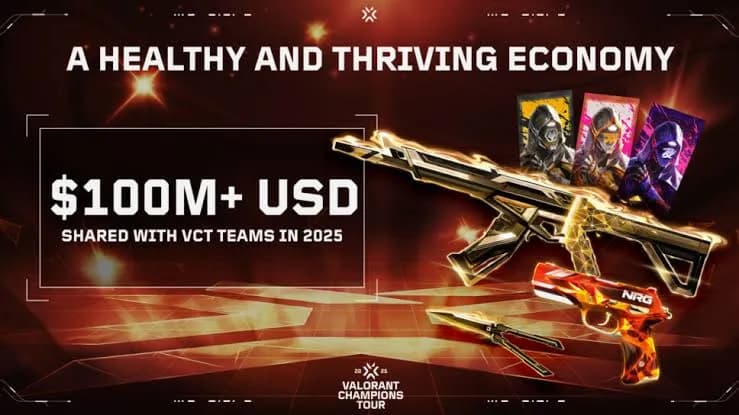
For the past season of the Valorant Champions Tour alone, Riot says it shared more than $100 million in digital revenue with teams — a record amount.
« We've loosened up a bit about how we manage the sport, and teams have adjusted their financial model, and we are sharing more revenues with them than we ever have. Last year, for the Valorant Champions tour, we shared over $100m in digital revenues with teams. »
The publisher goes further by letting teams develop other revenue streams: some, like Karmine Corp in France or T1 in South Korea, run their own events, and Riot now says it is "more liberal" about allowing them to take part in third-party tournaments.
As a result, according to Needham, the team side of the business is in as good a place as it has ever been, following a painful correction — particularly on professional player salaries, which were overpaid back when capital was flowing freely.
Transmedia and upcoming games
Beyond esports, Needham oversees everything that "wraps around the game": music, consumer products, platform, player support. His formula sums up the company's ambition.
.webp&w=3840&q=75&dpl=a9b0b5c81fd8ca5f24378b2ff53e749d024b960a)
After the success of Arcane on Netflix, the publisher remains cautious but leaves the door ajar: « Transmedia is a part of our future. » On the games side, Riot is maintaining League, preparing a big year for Valorant — « The Valorant IP will be growing very soon » — and still working on Project F and an MMO set in the world of Runeterra.
For esports, the direction for the coming years comes down to two words: more events. The ultimate goal, however, doesn't change.
We are well on our way to sustainability. We're very close.