





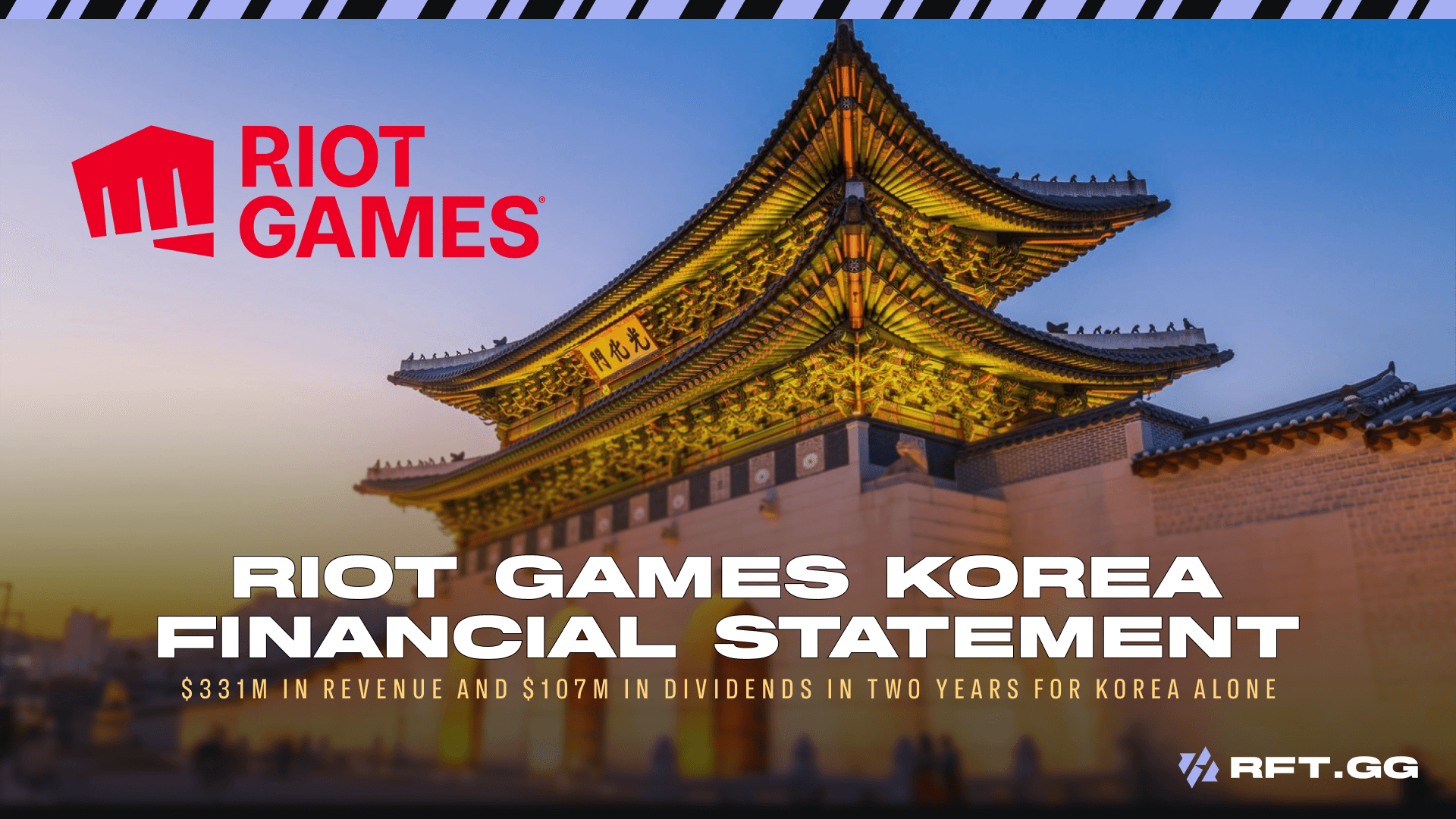
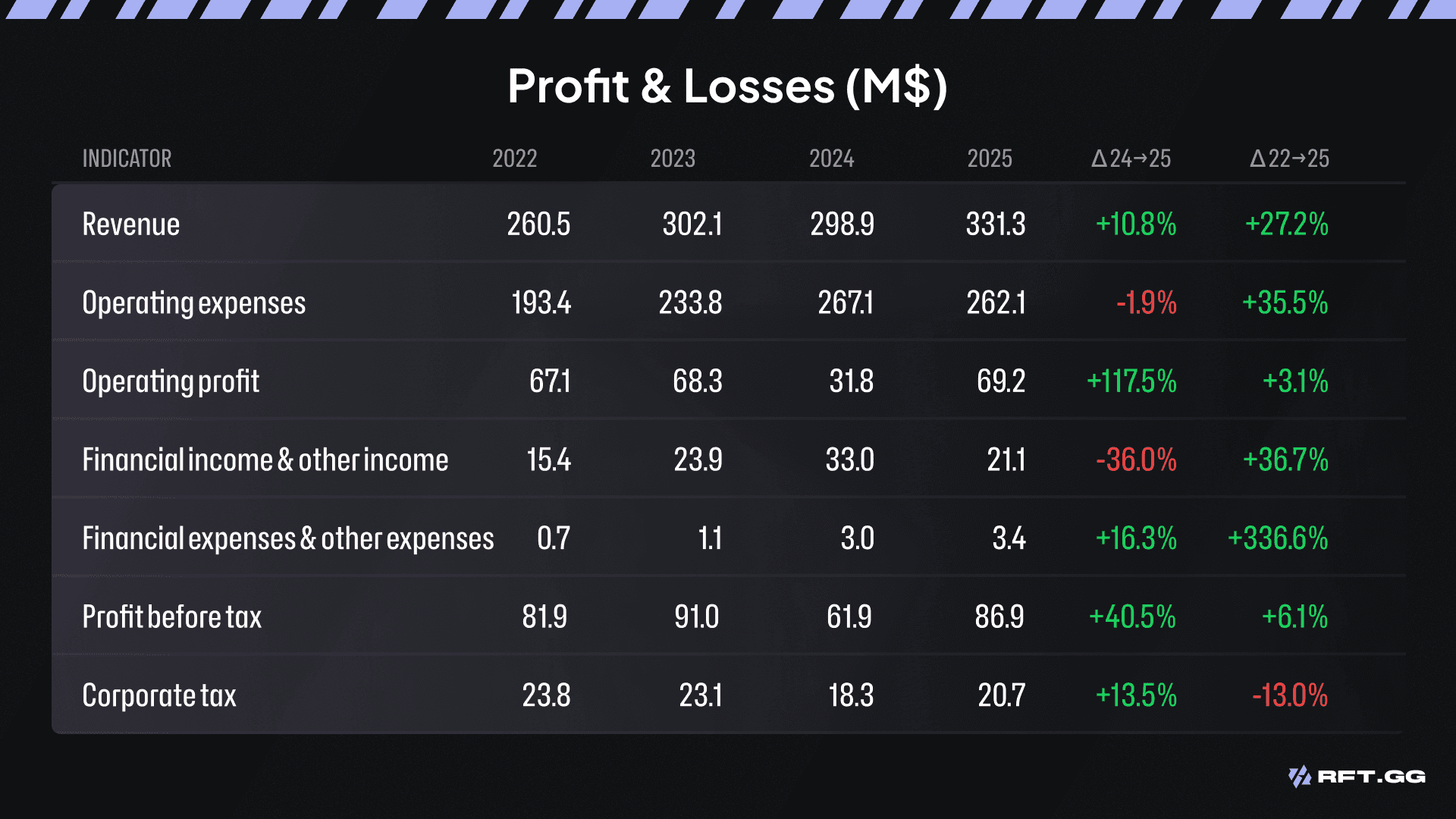
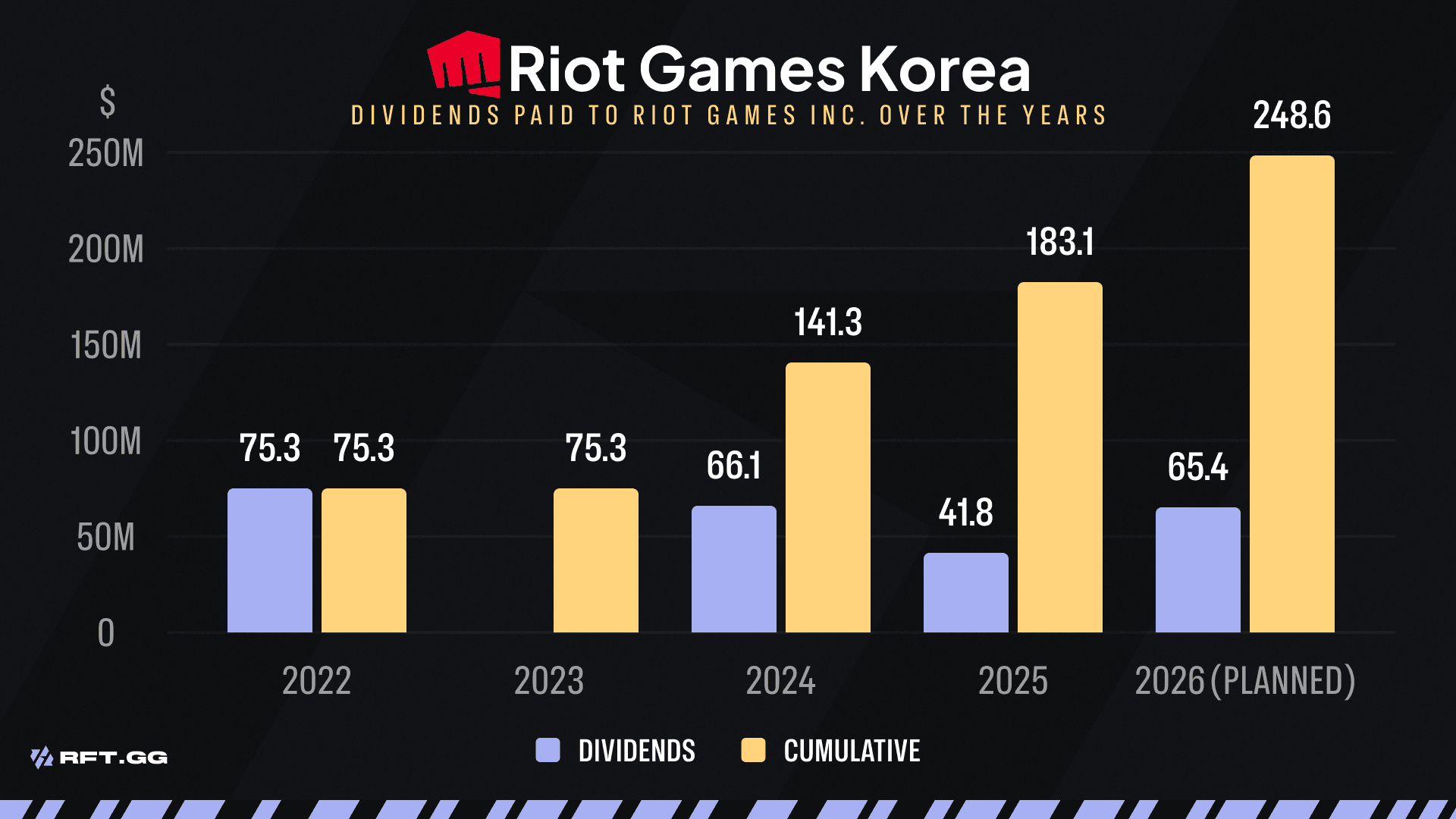
One year after a tumultuous 2024, Riot Games Korea (RGK) reports a sharp recovery in its 2025 results: $331 million in revenue (+10.8%), an operating income of $69 million — more than double that of 2024 — and a $65.4M dividend to be paid out.
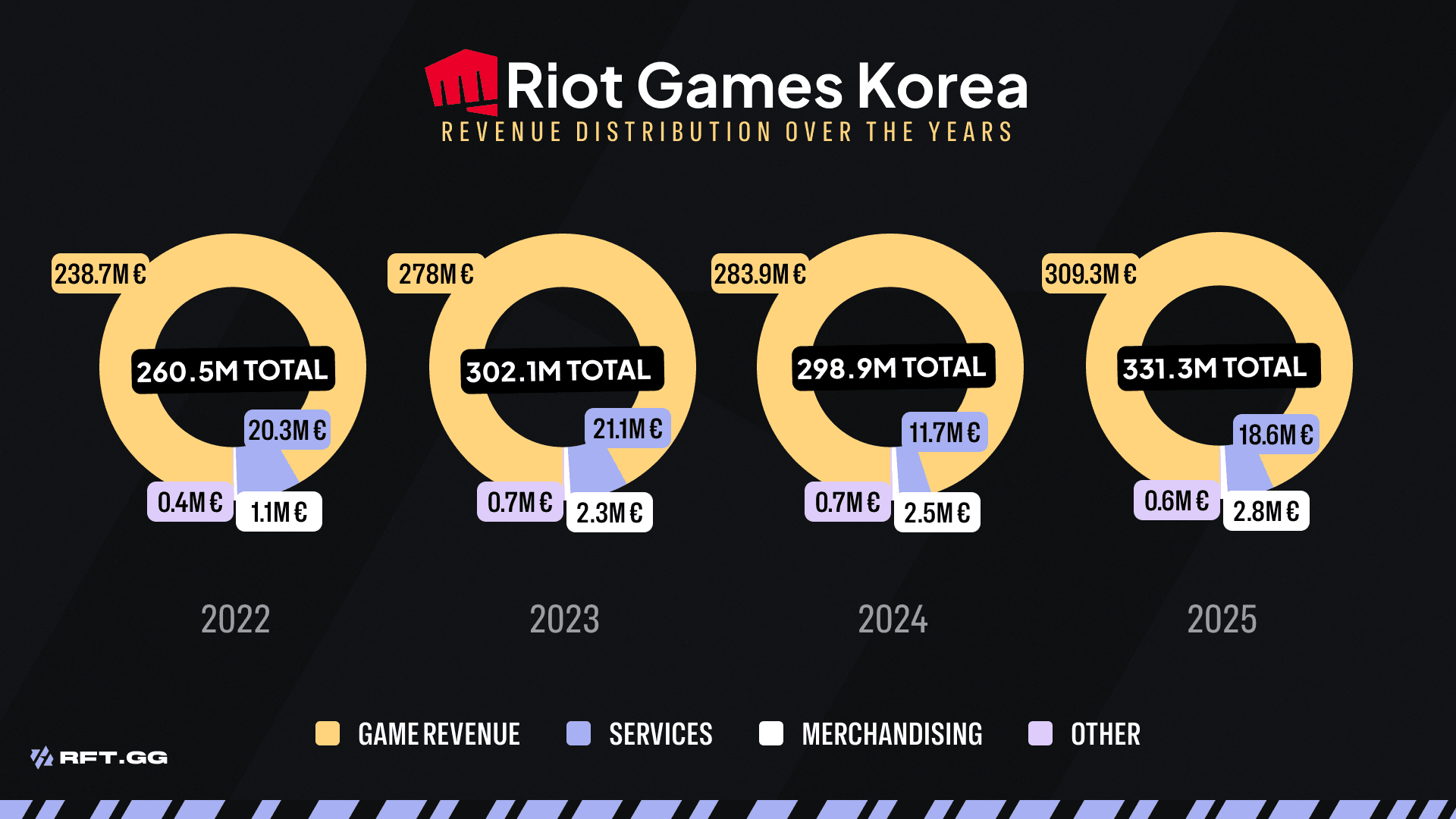
Sales of skins and virtual content across League of Legends, VALORANT and Wild Rift reached $309 million (+8.9%). This remains the publisher's primary revenue driver. Service revenues, which now include post-merger LCK esports operations, rebounded to $18.6 million after bottoming out at $11.7 million.
The LCK absorbed, its losses written off
The report confirms what I had documented in a previous article: the LCK, as a legal entity, no longer exists. On October 31, 2025, Riot Games Korea absorbed its wholly owned subsidiary, the entity that had operated the Korean league independently since its inception. The official reason: "improving managerial efficiency." In practice, the merger writes off $34 million in accumulated losses, the LCK's revenue had fallen from $18.8M to $7.7M over three years.
The immediate consequence: RGK's 2025 accounts are standalone financial statements, no longer consolidated. The LCK as a traceable economic unit has vanished from the financial record. Its costs, revenues and profitability are now buried within Riot Games Korea's books. Over the 2022–2024 period, public filings made it possible to identify between $4.7M and $5.7M per year in direct distributions to the ten franchised teams. In 2025, that line item disappears, folded into the broader "commissions" category with no further breakdown available.
Royalties and dividends
In 2025, Riot Games Korea transferred $234 million to its American parent company — over 70% of its revenue. In practice, the money flows out through two channels.
The first runs throughout the year in the form of invoices: RGK pays $90 million to Los Angeles for the right to operate League of Legends and VALORANT in Korea, and an additional $68 million for IT services provided by headquarters.
W article lebronhajj