






Riot shipped patch 26.10 on May 12. One change in the "Game Systems" section, presented as a clarity fix, strips a tool used by high-level players.
The patch note reads: Riot is removing the old aggro rule "to prevent it feeling like minions sometimes randomly change their target." The presentation is quality-of-life. The mechanical impact is not.
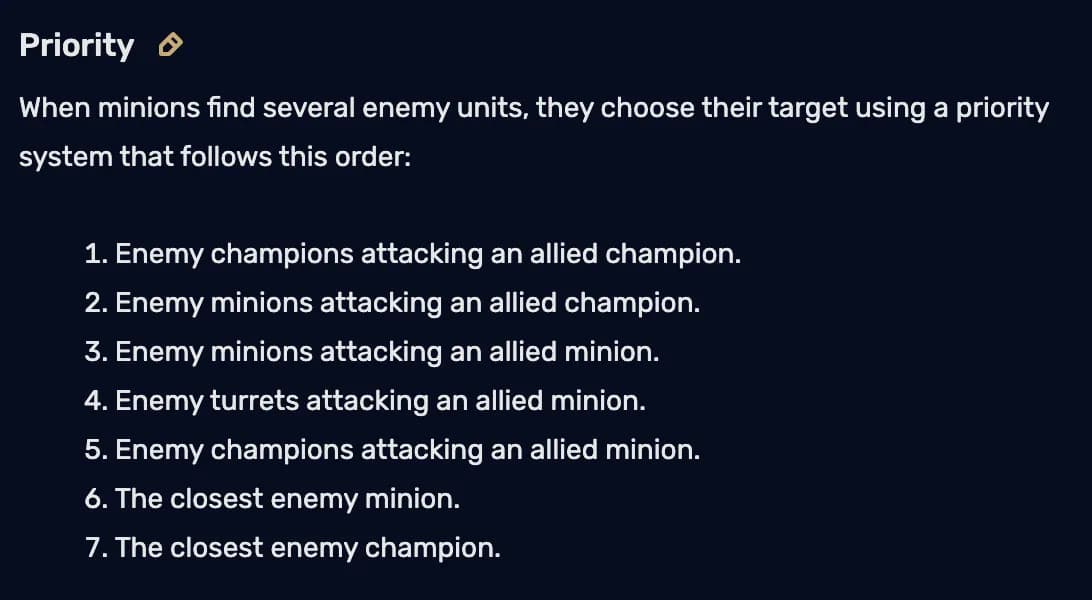
Minion aggro runs on a seven-step priority list. Rule five pushed any enemy champion who attacked an allied minion up the wave's aggro queue. That rule is now gone.
What's really changing ?
For most of the players, nothing changes. For Challenger and pro play, two specific techniques are off the table.
The first — forcing focused fire on a single caster. Tagging one enemy caster pulled all three onto the attacker. Releasing aggro made them snap back to the closest target — meaning all three would now hit the same minion.
The second — restarting a slow push mid-wave. Tagging a minion that was already locked onto another minion peeled it onto the champion. That isolated minion let players rebuild a separate slow push, decoupled from the main wave — a core tool for setting up dives and lane tempo.
Both techniques relied on old patch. Neither works after 26.10.
The competitive read
Laning loses depth for the top players. Wave manipulation tricks that separated S-tier laners from the field are now removed from the game. Riot positioned the change as cleanup. For the Tier 1 leagues, it strips out a quiet competitive variable that coaches and players had spent years optimizing around.